
-
Impulses
-
- More about IMPULSES
- More about IMPULSES
-
Transformer manufacturers
- Transformer manufacturers
- What transformer manufacturers say about the VRDT
- South America's champions of the energy transition
- Traction Transformers – Future on the Rail
- Time of the giants: XXL transformers for more power
- "Reinhausen is ready to deliver!"
- Oversized de-energized tap-changers
- The most powerful transformers in the world for a 1,100 kV HVDC line in China
- "We are in a growth market with the VRDT"
-
Digitalization
- Digitalization
- Using artificial intelligence to create more efficient networks
- Upgrade for the US power grids
- How AI can lend a hand
- myReinhausen: MR's central digital customer platform
- Why data centers (may) never fail
- Automation? (Cyber-) Secure!
- Remote Solutions: Professional help from a distance
- "Digitalization of the power grids will only work with comprehensive security measures"
- Why are you digitizing your transformers? Three questions for Rúnar Svavar Svavarsson.
- Six challenges, six solutions – Intelligent sensors for safe transformers
-
Energy transition
- Energy transition
- VRDT goes Brazil
- 5 theses on the energy transition
- The VRDT is the ideal solution to solve voltage problems in our distribution grids
- Making transformers more sustainable
- 940 tons of power regulation
- Sunny prospects: Municipal solar storage devices
- Four reasons why regulated distribution grids are the future
- "The energy transition is taking place in the distribution grids"
- Five theses on the future of power grids
- Storage at all network levels
- Test systems for the energy revolution
- Climate change, energy revolution and the future of power grids?
- A new design for utility poles
-
Wind and solar power
- Wind and solar power
- The North Sea as Europe's green power plant
- Sahara electricity - safe for the island
- Are wind farms the new power plants?
- Direct current at all grid levels
- The MSCDN plant – the new "power plant generator" for stable grids
- Clean power grid with high-frequency filters
- Weatherproof cable testing for offshore wind parks
- VRDTs for Australia's distribution grids
-
Lifetime optimization
- Lifetime optimization
- How retrofits make transformers future-proof
- Transformers on the limit: How a digital retrofit extends service life
- Maximum protection against electric arcs
- Top service for a long transformer life
- Precise condition assessment of transformers with TESSA® APM
- Digital transformer check - MR provides training at thyssenkrupp's steelworks
- How ISO 55000 facilitates asset management
- Clever fleet management for transformers
- Retrofit: Bushing monitoring for phase shifters
- Retrofit: Breathing new life into old transformers thanks to new tap changers
-
Power supply in industry
- Power supply in industry
- When every second counts: how MR can help with power outages in industry
- More power for Phoenix
- Get the most out of Green H2 - with proven MR Solutions
- Waste water generates energy
- Asian industry uses voltage regulation distribution transformers in the fight against fluctuating grids
- Putting an End to Harmonics in Industries
- Power Quality in shipping: Cleaner grids
-
Globalization
-
-
Portfolio
-
Career
-
Company
- 100 Years


Data center industry sees grid connections as bottleneck to expansion
German Datacenter Association industry meeting with Digital Affairs Minister Dr. Fabian Mehring at Reinhausen in Regensburg.
Data centers are growing rapidly with the rise of artificial intelligence, but grid connections are being developed much more slowly. Grid operators, data center operators, technology partners and policymakers discussed how to resolve this conflict on 21 October 2026 at a German Datacenter Association (GDA) industry meeting hosted by Reinhausen GmbH in Regensburg.
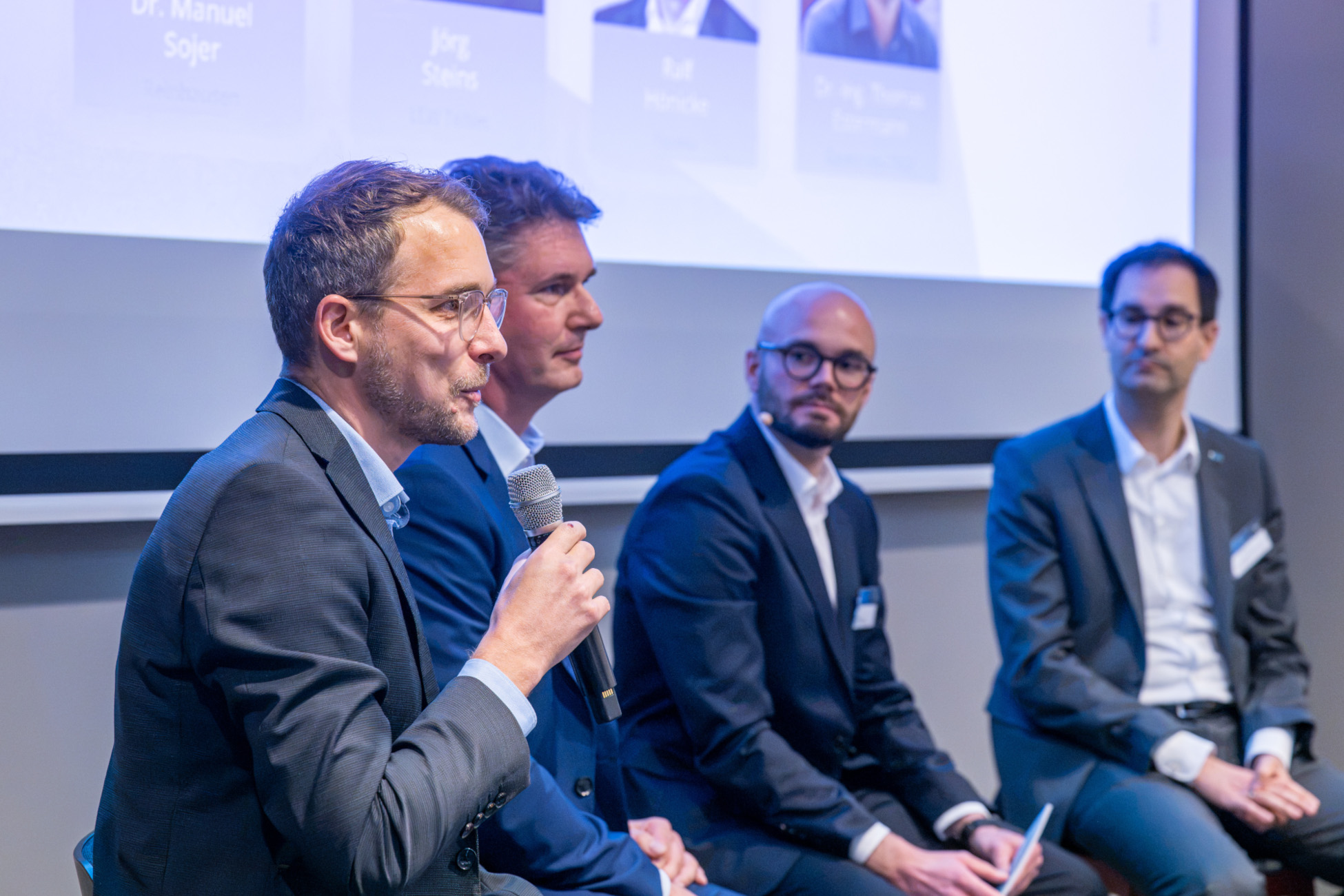
The panel discussion, moderated by Sebastian Hilmer, Head of Strategic Partnerships at Reinhausen, brought together the perspectives of data center operators, energy providers and technology partners. Dr.-Ing. Thomas Estermann, Head of Asset Strategy and Technical Principles at Bayernwerk Netz GmbH, illustrated the scale of the challenges involved in creating a future-proof energy system. Bayernwerk Netz expects electricity consumption in Bavaria to approximately double by 2045 compared with today.
“Conventional grid expansion alone will not enable us to meet demand in a timely and resource-efficient manner,” said Dr. Estermann. The requested connection capacity of a single data center, he said, can exceed the electricity consumption of the city of Regensburg, including its industry. “In our long-term grid expansion planning, we are therefore not only allocating record annual budgets in the billions, but also bringing existing grid capacity, future demand, digital solutions, flexibility and regional development perspectives together more closely as a whole.”
Breuer proposes new rules for grid connections
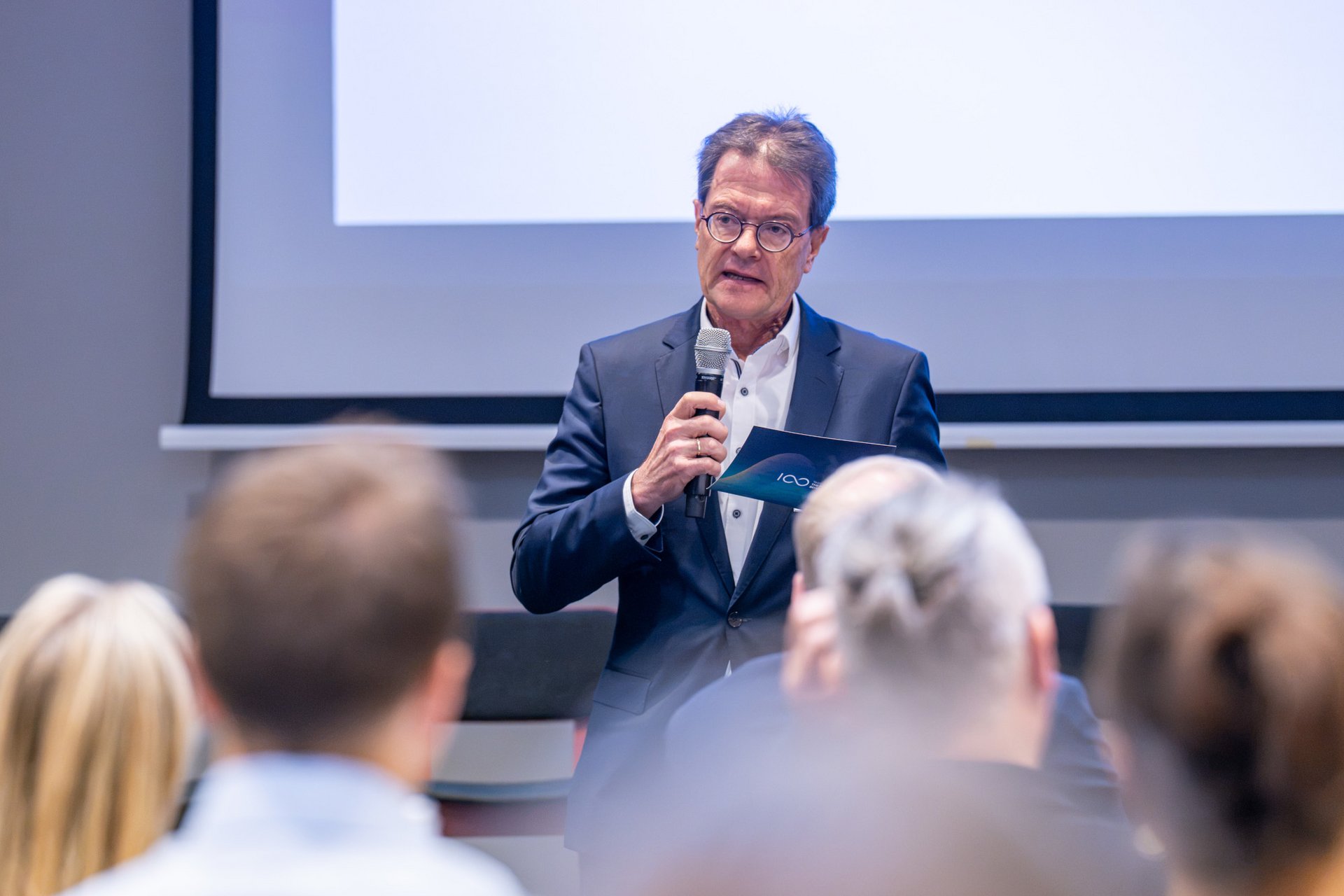
Wilfried Breuer, Managing Director and spokesperson for the management of Reinhausen GmbH, was a managing director at transmission system operator TenneT before joining Reinhausen. He proposed that grid connections should in the future be allocated based on how well they fit into the grid and how little additional effort they entail for it. “Until now, the rule has been: whoever applies first gets connected first, even if their connection results in high follow-on costs and takes a long time. We need regulation that gives greater priority to grid connections for data centers, renewables and battery storage systems based on how well they support the grid,” Breuer said.
According to Breuer, all sides benefit. Operators can connect to the grid sooner, while grid operators save effort. And because data centers pay grid fees through their electricity consumption, they can also reduce the burden on electricity customers. As Dr. Estermann reported, Bayernwerk Netz has already taken an initial step in this direction. A new criteria-based allocation process for high-capacity grid connection requests was introduced in August and has been open for applications since October. Moving away from the first-come, first-served principle, the new approach will enable grid capacity to be allocated more transparently, predictably and efficiently, while maintaining non-discriminatory access.
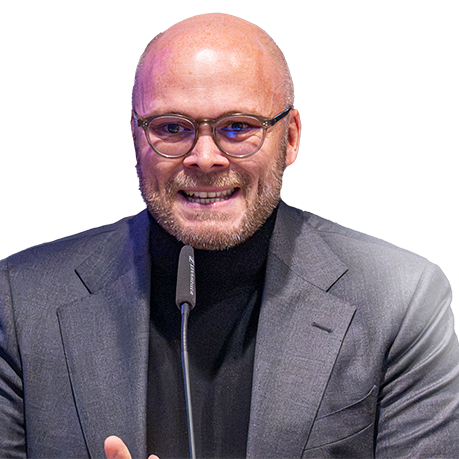
„Anyone who wants to lead in AI must accelerate data center development!“
Dr. Fabian Mehring, Bavaria´s Digital Affairs Minister
Bavaria’s Digital Affairs Minister Dr. Fabian Mehring sees high-performance data centers as the backbone of the digital future and an essential prerequisite for Europe’s competitiveness and digital sovereignty. “The future runs on computing! Anyone who wants to lead in the global AI race rather than merely watch from the sidelines needs the necessary digital infrastructure. Data centers are the power plants of the AI age. Without sufficient computing power, even the best innovations will fall by the wayside,” Mehring emphasized.
To at least double data center capacity in Germany by 2030, he said, infrastructure development must now accelerate. Alongside a secure, affordable and sustainable energy supply and suitable sites, lengthy planning and approval procedures are a particular challenge. Mehring is therefore calling for data centers to be recognized as infrastructure of overriding public interest: “We cannot compete in the global AI race if we approve our digital infrastructure at a snail’s pace. Anyone who wants digital sovereignty and economic strength must accelerate the construction of data centers. To do that, we need less bureaucracy, faster procedures and greater courage to embrace the future.”
Reinhausen works at the interface between the grid and data centers
Reinhausen works at the interface between the grid and data centers
On the panel, data center operators, energy providers and technology partners shared their perspectives. Ralf Hönicke, Vice President EMEA IBX Operations East at Equinix (Germany) GmbH, sees operators as having a responsibility to be good neighbors: “As data center operators, we need to stop being perceived as a nuisance and instead be seen as a neighbor that invests in power grids and substations itself. This is not just a matter for the federal and state levels. We need to speak directly with mayors in local communities.” Jörg Steins, Managing Director of LEW TelNet GmbH, recommends bringing together everyone involved at a very early stage: “It makes no sense to complete your plan and construction and only then approach the energy provider to register your energy needs.”
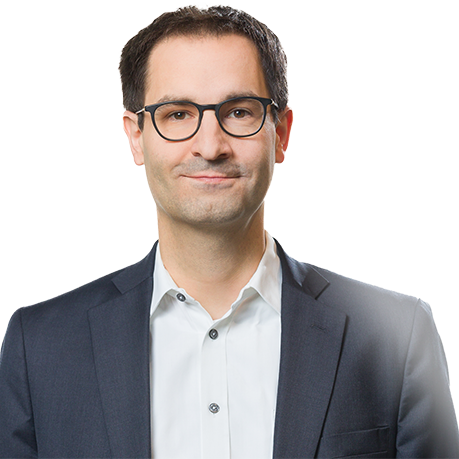
„As a technology partner, we are positioned technically at the very interface between the grid operator and the data center operator. We help ensure that data centers are connected to the grid safely and operate reliably once connected.“
Dr. Manuel Sojer, Managing Director of Reinhausen GmbH
To achieve this, Reinhausen regulates voltage and compensates for reactive power — the electrical power associated with energy flowing back and forth between the grid and the facility without doing useful work. This helps data centers comply with grid operators’ technical connection requirements. Inside data centers, Reinhausen solutions filter out harmonics that can interfere with other equipment. Sensors on transformers and cables report the condition of the equipment so that maintenance can take place before a failure occurs.
For future AI data centers, Reinhausen has developed a solid-state transformer, for which the company is now working with Siemens to bring to series production. It is designed for the very high power levels and sharp load changes of large data centers. Participants were able to see an operating unit during a subsequent factory tour.
About the German Datacenter Association
The German Datacenter Association (GDA) is the industry association for the data center sector in Germany. Its nearly 340 members include operators, suppliers, consulting firms, municipalities, universities and research institutions. The association regularly organizes industry meetings together with member companies. Reinhausen GmbH is a member of the GDA.
About Reinhausen GmbH
Reinhausen is a family-owned company founded in 1868 and headquartered in Regensburg, Germany. In 1926, a patent application was filed for the high-speed resistor switch, laying the foundation for the company’s current business. Today, Reinhausen employs around 5,900 people, generates annual revenue of 1.5 billion euros and is represented by 42 affiliated companies at more than 60 locations in 26 countries. The company’s innovative solutions regulate approximately half of the electricity consumed worldwide.





We are here for you. Wherever you are.
Looking for the right contact partner?
Do you have a concern, but don't know whom you should contact? You will find that information in our contact overview. In the event of any technical disturbances, our 24/7 support is always at your disposal.
Welcome to myReinhausen
myReinhausen is MR's central, digital customer platform. On myReinhausen, customers can access customer-specific MR information as well as numerous free features related to the MR portfolio.
myReinhausenJoin Reinhausen family
Find your ideal job quickly!
Check our vacancies here. Apply today and contribute at the world market leader in energy technology keeping the energy supply stable in the future.
ReinhausenShop: Always open
Welcome to ReinhausenShop, your independent access to a curated selection of field-proven, ready-to-order MR products for power transformers. Order simple, fast, and online, get instant quotes and enjoy transparent pricing.
Our portfolio is constantly growing to meet your needs, check out shop.reinhausen.com from time to time!
ReinhausenShop